
Lost wisdom, dormant ethnobotany, and doing this work better
Where does the psychedelic movement intersect with herbalism and history?
We had an incredible discussion with Dr. Susan Leopold of United Plant Savers at yesterday's Hollers & Horizons.
Susan shared stories of her own journey into the worlds of herbalism and psychedelics, which began when she discovered Richard Evans Schultes' The Healing Forest. That journey took her to incredible parts of the world, including Peru's Sachamama Garden, the Oak Spring Garden Library, United Plant Savers' Botanical Sanctuary, and, most recently, Bhutan.
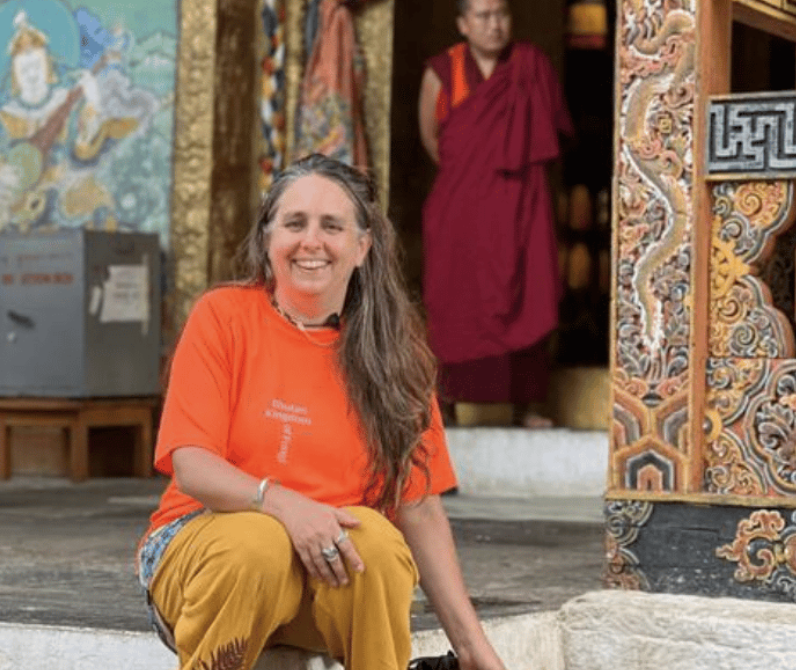
Dr. Susan Leopold in Bhutan. Source: https://unitedplantsavers.org/rooted-knowledge/
The through line of Susan's work has always been connected to historical context and conservation, both of which she sees lacking in the modern psychedelic "renaissance." Her talk drew parallels between the ethnobotanical erasure of psychedelic compounds and the amnesia of healthcare systems in the United States, which do not recognize herbal medicine as an official treatment option despite centuries of practice.
Susan shared deeply from her own well of wisdom. Her talk inspired all of us, particularly her concept of "dormant ethnobotany," which posits that humans transition away from and back to active ethnobotanical knowledge in cycles – and that knowledge reemerges regardless of whether people have access to teachers and texts.
It's a concept shared by many Indigenous and traditional practitioners of healing, who understand that the knowledge they receive is directly from the plants themselves. The complexity of this living web of life is not easily transferrable to the siloed ways knowledge and policy are produced today in the U.S. – but it's something many of us grasp inherently.
If you're new to AppCoLab, Hollers & Horizons is our monthly speaker series and "Appalachian Town Hall," where we bring together a leader in the region (or who is working on something incredible we want to know more about!) in conversation with our community. All recordings are available in our archives.