
A Year of Psychedelic Policy Movement in Appalachia
What changed in Appalachian policy on emerging mental health treatments over the past year, from our 2025/2026 report to now.
Appalachia has been part of the conversation about emerging mental health treatments for a while now despite what some might think. Communities, clinicians, veterans, researchers, and advocates across the region have been asking hard questions and doing the groundwork for years. What changed over the past year is that the groundwork started turning into law, or at least attempts to become law.
Ibogaine and the opioid crisis
Kentucky offers the sharpest example. Its legislature passed Senate Bill 77 to create a research fund and a framework for ibogaine, a compound being studied for opioid and other substance use disorders. The governor vetoed it. The legislature overrode the veto, and an emergency clause put the law into effect the same day.
Tennessee passed its HOPE Treatment Act with near-unanimous votes in both chambers, opening the door for the state's research institutions to join federally authorized ibogaine trials. Mississippi signed a law directing its health department into a multistate ibogaine research consortium. West Virginia's legislature passed a similar bill, though the governor vetoed it over concerns about undefined funding.
It helps to be clear about what these laws do and do not do. They build research and clinical-trial frameworks. They do not make ibogaine available to walk-in patients, and they do not change its federal status. What they signal is that lawmakers in the high addiction rate states are willing to look for answers their communities have not found in conventional care.
Trigger laws and a first step toward oversight
A quieter pattern spread alongside the ibogaine push. Virginia, West Virginia, and Mississippi each enacted what are often called trigger laws, which align state rules with future federal approval and rescheduling of specific synthetic psilocybin formulations. Nothing changes on the ground until the federal government acts, and the state groundwork is laid in the meantime.
Georgia went further than most with HB717. Its new law directs the state medical board to write and enforce rules for clinics offering psychedelic-assisted treatment and therapy, with a rulemaking deadline at the end of 2026 and clinic licensing to follow. Among Appalachian states, it is the closest thing yet to real operational oversight.
The federal picture changed too
The national backdrop shifted as well. In April 2026, a federal executive order directed agencies to speed up review of these treatments, open a Right to Try pathway for investigational compounds including ibogaine, and set aside matching funds for states running their own research programs. The order does not approve or reschedule any substance on its own. It changes the direction of travel, and it added momentum to the state efforts already underway.
Enactment is not the same as access
This is the part we keep returning to. A law on the books is a long way from care in a community. Several of the new federal access pathways reward patients who have money and the ability to travel, which is a real concern for a rural region where the weight of addiction and mental illness falls heaviest on the people with the fewest resources.

Not every state is moving at the same pace. North Carolina's task-force bill stalled before it reached a floor vote. Others remain in study, or have seen no activity at all. That quiet should not be read as opposition. Across much of the region it reflects part-time legislatures, thin regulatory capacity, and a hard-earned caution about drug policy after everything the opioid years have cost us.
What we are watching
The year ahead looks like a year of follow-through. Whether Kentucky's fund finds a research partner. Whether Tennessee seats its new council. Whether Georgia's clinic rules hold up. Whether the federal promises turn into anything real for the people who need them most. We will keep tracking it, state by state, and translating it into plain language for communities that have too often been left to read the headlines and guess.
The full 2027 policy report goes deeper, and will be released early November 2026. It includes a state by state and category by category strucutre. If you want the updates as they happen, our free newsletter is where to follow along:

Integration & Access
Currently, Appalachian citizens may be traveling to Oregon or Colorado for legal psychedelic assisted therapy, They may be flying to Mexico, Costa Rica, Peru, or other countries for legal access and coming home to communities who lack experience and knowledge to support and maximize the benefits that may come or to meet the challenges and adverse events associated with the use of these substances. This is why we offer Psychedelic Integration Services. We offer a combined 30 years of expertise encountering these substances, reach out if you or a loved one need support.
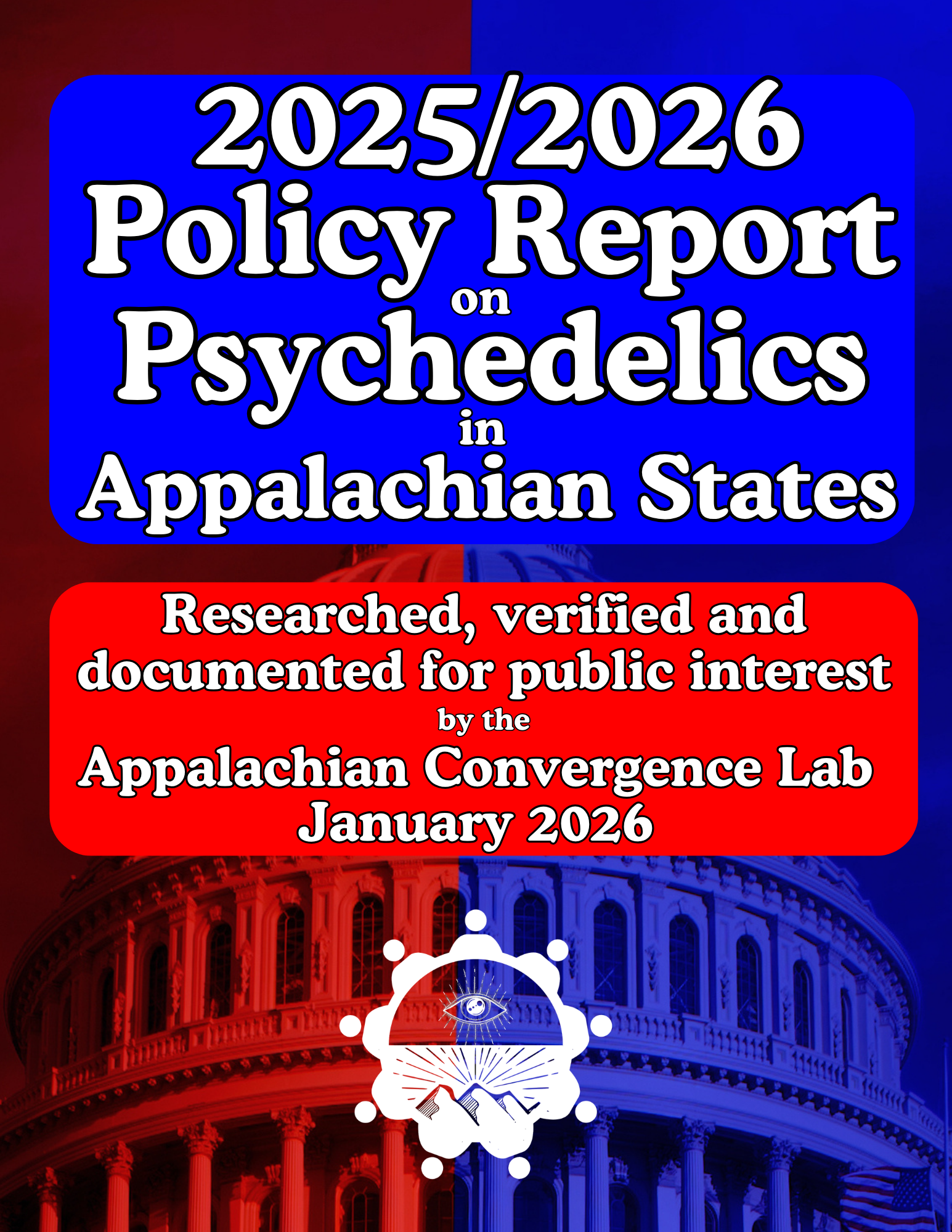
Incase you missed it.
This report covers all 13 states. 10 Categories of Psychedelic legalization options, non-partisan approach the public interest.
The simplified list of Appalachian State Policy Updates
Kentucky: SB 77 created a research fund and framework for ibogaine. Governor vetoed, legislature overrode, emergency clause made it effective same day.
Tennessee: HOPE Treatment Act passed near-unanimously, opening the door for state research institutions to join federally authorized ibogaine trials.
Mississippi: Signed a law directing its health department into a multistate ibogaine research consortium.
West Virginia: Legislature passed a similar ibogaine bill; governor vetoed over undefined funding. Separately enacted a trigger law aligning state rules with future federal psilocybin rescheduling.
Virginia: Enacted a trigger law aligning state rules with future federal approval/rescheduling of synthetic psilocybin formulations.
Georgia: HB717 directs the state medical board to write and enforce rules for psychedelic-assisted treatment clinics. Rulemaking deadline end of 2026, licensing to follow. Furthest along on real operational oversight in the region.
North Carolina: SB 1018 is sitting in the Senate Committee on Appropriations/Base Budget
Federal: April 2026 executive order directed agencies to speed review, opened a Right to Try pathway for investigational compounds including ibogaine, and set aside matching funds for state research programs. Does not approve or reschedule anything on its own.
None of this creates walk-in access yet. These are research and oversight frameworks, not treatment availability. New federal access pathways favor people with money and the ability to travel, a real gap for a region where addiction and mental illness hit hardest among people with the fewest resources.
What's next: Whether Kentucky's fund finds a research partner, Tennessee seats its council, Georgia's clinic rules hold, and whether federal promises turn into anything real. The full 2027 policy report with more updates will be out early November 2026.